


Creating a curiosity of nature
By Judy Opar, Finance Manager at The Riverwood Conservancy
As a young child, I was afraid of sumac. The plant’s tight stem formation looked like an opposing army to me, menacing and impenetrable. I imagined if I got too close, the pointy leaves would suddenly turn into teeth, grab me, pull me in, and I would not be able to escape. Once trapped inside the ranks of the limbs, the flowers – which in my young mind were made up of hungry mounds of maroon-coloured bees – would swarm and feast on me.
When I saw sumac, perhaps while out walking in our woods, or while sitting in the back seat of the car looking out the window, my heart would leap in fear.
My perception changed this year on a guided walk at Riverwood. Staff from The Riverwood Conservancy pointed out the large sumac cluster near the front entrance to the park, and told me something I didn’t know – that a large patch of sumac may not be a marauding multitude but possibly just one or two individual trees!
Apprehension turned into curiosity. After the guided walk, I approached the sumac (from behind, just in case) and to my surprise the stems I found were fuzzy and felt like velvet. The blossoms were also fuzzy, but no bees could be found. The texture at my fingertips could not be reconciled with any idea of malevolent vegetation. I was determined to learn more about this tree that I had feared for most of my life.
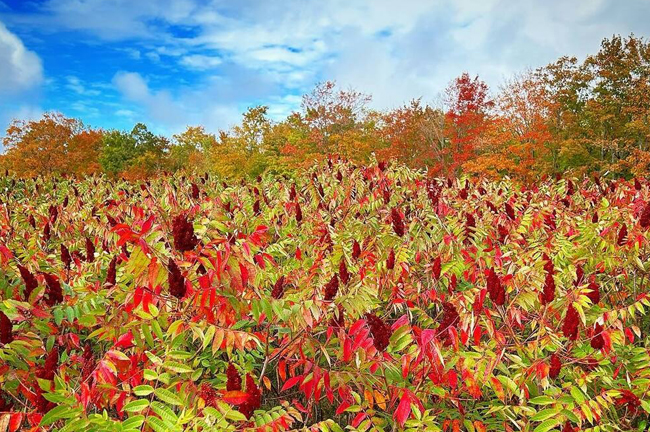
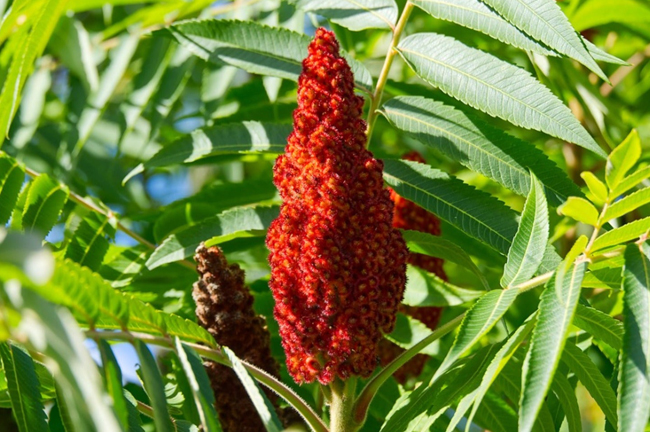
A quick internet search suggested I had met my first staghorn sumac, appropriately named due to the resemblance of new antler growth.
This remarkable tree-shrub grows primarily by sending out shoots under the surface of the ground, called rhizomes, by which it can spread three or more feet each year.
The delightfully fuzzy hairs serve several practical purposes for the plant. They help the plant control moisture by capturing water and reflecting sunlight. The fuzz on the berries helps protect the seeds from predation while forming.
Sumac can be propagated by seed but only after a good soak in hot water, or with the help of a journey through the digestive tract of a bird.
Curiosity is a gift that came from a guided walk in Riverwood's natural spaces. Now I'm intent upon learning more about sumac and its various medicinal uses as described by Indigenous peoples.
Had I gone for a walk at Riverwood by myself that day, I would not have received that gift. I am grateful for the wisdom of The Riverwood Conservancy staff that autumn day, which helped me dispel an old fear I had been clinging to for too long.